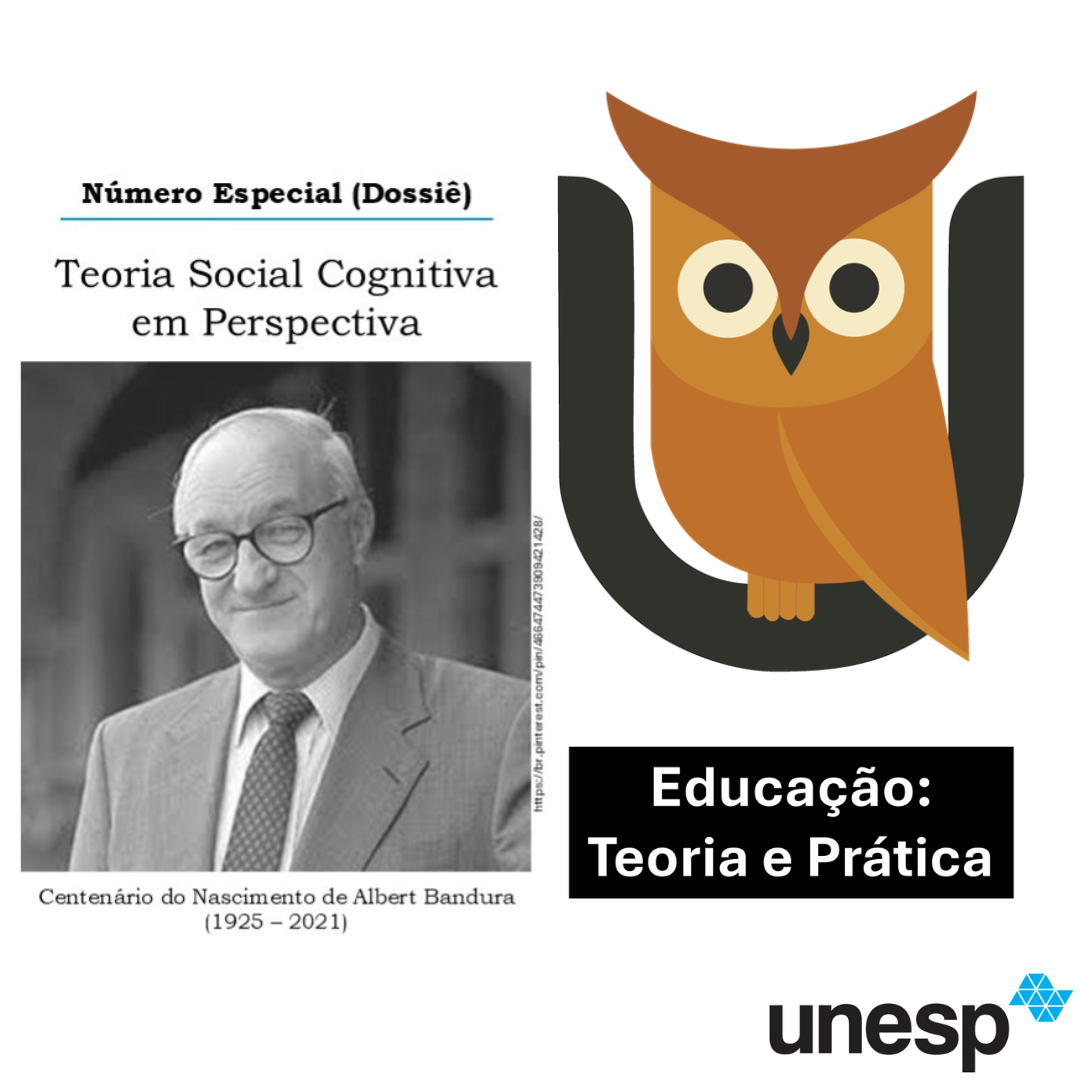
Contribuciones de Albert Bandura a la Educación
DOI:
https://doi.org/10.18675/1981-8106.v35.n.70.s18997Palabras clave:
Teoria social cognitiva. Autoeficácia. Aprendizagem observacional. Autorregulação.Resumen
Albert Bandura se encuentra entre los más grandes psicólogos de todos los tiempos. Sus contribuciones a la psicología son demasiado numerosas para enumerarlas en un artículo breve. Notablemente, desarrolló la teoría social cognitiva a partir de su predecesora, la teoría del aprendizaje social, que estaba fuertemente basada en el conductismo. Al incluir variables cognitivas y afectivas en la teoría social cognitiva, Bandura amplió significativamente el alcance y la aplicabilidad de esta teoría. La teoría ampliada también incorporó la autorregulación y, de manera importante, introdujo el concepto de autoeficacia. En este artículo destacamos tres de las contribuciones de Bandura a la educación: modelado y aprendizaje observacional, autoeficacia y autorregulación. Las contribuciones en estas áreas son especialmente destacables porque han afectado el desarrollo teórico, la investigación y la práctica. Inicialmente, discutimos el marco conceptual de la teoría social cognitiva, fundamentado en interacciones recíprocas entre influencias personales, conductuales y ambientales. Luego abordamos el modelado y aprendizaje observacional, la autoeficacia y la autorregulación. Para cada tema, discutimos la teoría y las evidencias de investigación que la respaldan, junto con algunas aplicaciones. El artículo concluye con sugerencias para investigaciones futuras.
Citas
BANDURA, A. Self-efficacy: the exercise of control. New York: Freeman, 1997.
BANDURA, A. Self-efficacy: toward a unifying theory of behavioral change. Psychological Review, v. 84, n. 2, p. 191-215, 1977a.
BANDURA, A. Social foundations of thought and action: a social cognitive theory. Englewood Cliffs, NJ: Prentice Hall, 1986.
BANDURA, A. Social learning theory. Englewood Cliffs, NJ: Prentice Hall, 1977b.
BANDURA, A.; ROSS, D.; ROSS, S. A. Imitation of film-mediated aggressive models. Journal of Abnormal and Social Psychology, v. 66, n. 1, p. 3-11, 1963.
BANDURA, A.; WALTERS, R. H. Social learning and personality development. New York: Holt, Rinehart & Winston, 1963.
SCHUNK, D. H. Learning theories: an educational perspective. 8th ed. Hoboken, NJ: Pearson Education, 2020.
SCHUNK, D. H. Peer models and children’s behavioral change. Review of Educational Research, v. 57, n. 2, p. 149-174, 1987.
SCHUNK, D. H. Social cognitive theory. In: HARRIS, K. R.; GRAHAM, S.; URDAN, T. (ed.). APA educational psychology handbook. Vol. 1: Theories, constructs and critical issues. Washington, DC: American Psychological Association, 2012. p. 101-123.
SCHUNK, D. H.; DIBENEDETTO, M. K. Self-efficacy and human motivation. In: ELLIOT, A. J. (ed.). Advances in motivation science. Oxfordshire, England: Elsevier, 2021. pp. 153-179.
SCHUNK, D. H.; ZIMMERMAN, B. J. Social origins of self-regulatory competence. Educational Psychologist, v. 32, n. 4, p. 195-208, 1997.
ZIMMERMAN, B. J. Becoming a self-regulated learner: An overview. Theory into Practice, v. 41, n. 2, p. 64-70, 2002. Disponível em: https://doi.org/10.1207/s15430421tip4102_2. Acesso em: 15 jan. 2025.
ZIMMERMAN, B. J.; SCHUNK, D. S. Albert Bandura: the scholar and his contributions to educational psychology. In: ZIMMERMAN, B. J.; SCHUNK, D. H. (ed.). Educational psychology: a century of contributions. Mahwah, NJ: Erlbaum, 2003. p. 421-457.
Descargas
Publicado
Cómo citar
Número
Sección
Licencia
Os Autores que publicam nessa revista concordam com os seguintes termos:
a) Os autores cedem os direitos autorais à revista, com o trabalho simultaneamente licenciado sob a Creative Commons Attribution License que permite o compartilhamento do trabalho com reconhecimento da sua autoria e publicação nesta revista.
b) A política adotada pela Comissão Editorial é a de ceder os direitos autorais somente após um período de 30 meses da data de publicação do artigo. Transcorrido esse tempo, os autores interessados em publicar o mesmo texto em outra obra devem encaminhar uma carta à Comissão Editorial solicitando a liberação de cessão dos direitos autorais e aguardar resposta.
c) Esta revista proporciona acesso público a todo o seu conteúdo, uma vez que isso permite uma maior visibilidade e alcance dos artigos e resenhas publicados. Para maiores informações sobre esta abordagem, visite Public Knowledge Project, projeto que desenvolveu este sistema para melhorar a qualidade acadêmica e pública da pesquisa, distribuindo o OJS assim como outros softwares de apoio ao sistema de publicação de acesso público a fontes acadêmicas. Os nomes e endereços de e-mail neste site serão usados exclusivamente para os propósitos da revista, não estando disponíveis para outros fins. This journal provides open any other party  Esta obra está licenciada sob uma Licença Creative Commons